“If Africa is to define its future through energy, then the imperative is the industrialisation of scale, a
bold, systemic commitment to powering production, not just consumption.”
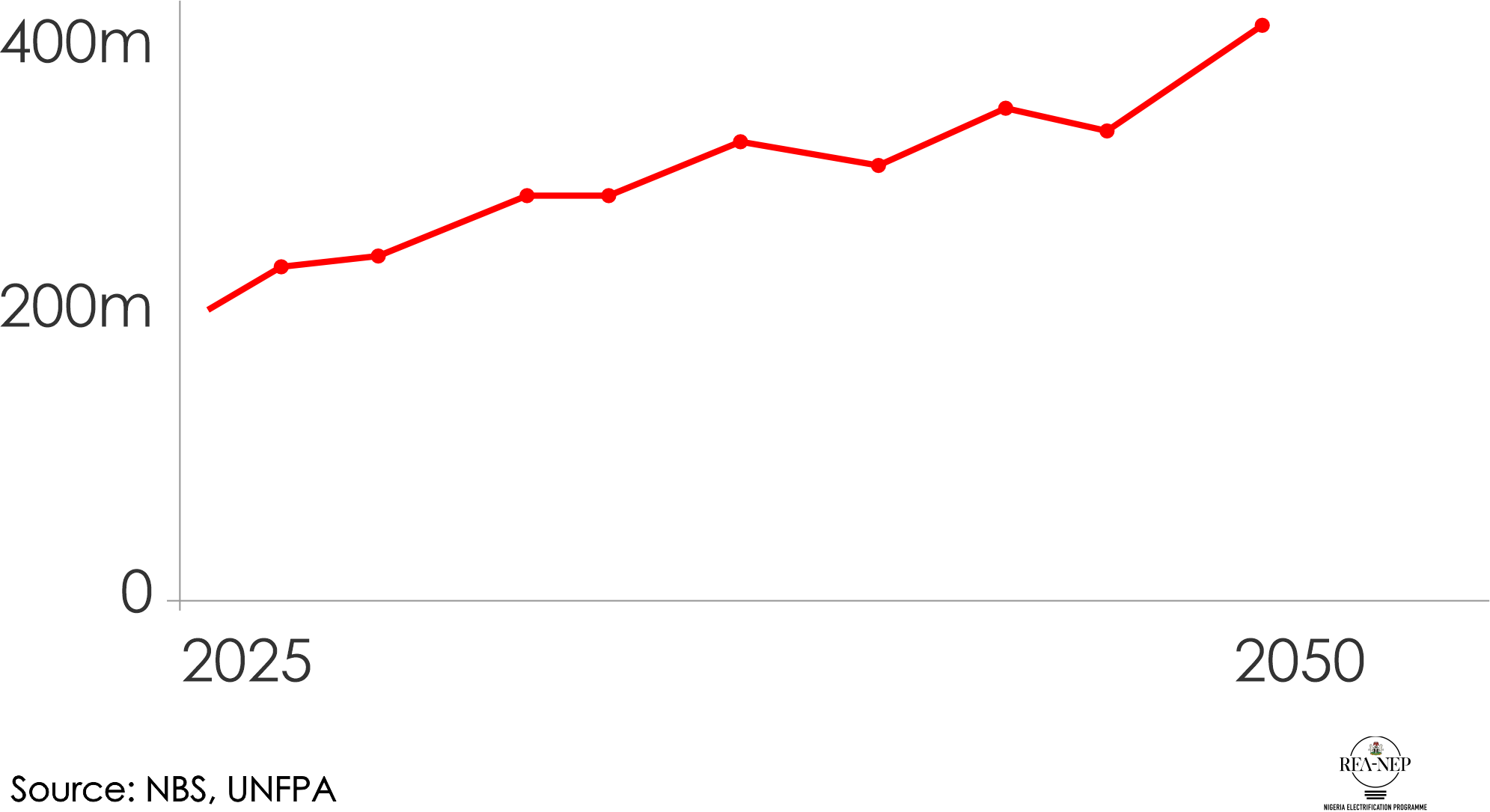
As of 2022, Nigeria’s population was estimated at over 200 million by the National Bureau of Statistics (Demographic
Statistical Bulletin, 2022). Looking ahead, the United Nations Population Fund (UNFPA) projects this figure will surpass 400
million by 2050, positioning Nigeria as one of the most populous nations on earth.
This demographic trajectory makes it clear: we do not need
electrification for its own sake. We need it to catalyse industrial
growth, drive productivity, and embed resilience into every layer of
our economy. We either build frameworks that deliver sustainable,
inclusive, and industry-driven energy access now, or we risk
entrenching cycles of energy poverty, economic stagnation, and
climate vulnerability
The Nigeria Distributed Access through Renewable Energy Scale-Up (DARES) Project, building on learnings from the Nigeria
Electrification Project (NEP), implemented from 2018 2024 by the Rural Electrification Agency (REA), recalibrates how we
conceive, implement, and sustain electrification in emerging markets. It represents the convergence of three imperatives:
sustainability, impact, and systemic change. It is also structured to be bold in ambition, meticulous in execution, and
catalytic in impact. It is our blueprint for scale, one designed to outlast political cycles, outgrow donor dependency, and
outlive the conventional lifespan of development programmes.
What’s New in Nigeria DARES?
Public Institutions sub-component: This intervention leverages the
Energy-as-a-Service (EaaS) model, marking a shift from traditional
Engineering, Procurement, and Construction (EPC) contracts, where
obligations typically end upon completion of construction of the
project, ensuring that federal public institutions are powered by
reliable and sustainable energy. Under EaaS, Energy Service
Companies (ESCo) drive financing and assume long-term
responsibility for plant operations, thereby embedding sustainability,
performance accountability, and financial viability into the lifecycle
of each project. This model relieves the Federal government and
host institution of full financial burden, and allows for private sector
investment, thereby ensuring that infrastructures are actively
managed for long-term impact.
Subnational Interventions sub-component: The
Subnational Interventions sub-component of Nigeria
DARES is a direct response to the decentralised vision of
the Electricity Act 2023, which empowers states to play
a more active role in their electrification journey. This
sub-component enables states co-design and coimplement solar electrification solutions for critical
public institutions, which are central to service delivery
and state development goals. Through strategic
partnerships with state governments and the
establishment of clear processes for engagement,
DARES is institutionalising state-level electrification
planning while ensuring alignment with national
electrification goals.
Standalone Solar (SAS) Component: The Standalone Solar (SAS)
component has adopted a targeted approach to expanding
energy access, building on lessons learned from the OutputBased Fund sub-component under the just-concluded NEP. The
implementation methodology under the SAS component is
structured as:
i. SHS Supply-Side Subsidy: distributes Tier 1 and Tier 2 plugand-play solutions to remote parts of Nigeria. Leveraging
geospatial data analytics, the country has been segmented by
Local Government Areas (LGAs), with higher grant rates allocated
to hard-to-reach locations, while urban areas have been
excluded from subsidy eligibility entirely.
ii. Solar for Business: targets energy-as-a-service (EaaS)
solutions for MSME clusters and agro-processing zones. The
objective is to drive energy independence and displace fossil
fuel-powered generators.
ii. Productive Use of Energy (PUE) Technologies: This subcomponent supports the deployment of productive-use
appliances and equipment, particularly for smallholder farmers
to enhance agricultural productivity, reduce post-harvest losses,
eliminate inefficiencies from fossil fuel-powered appliances, and
contribute to national food security through improved processing
and storage solutions.
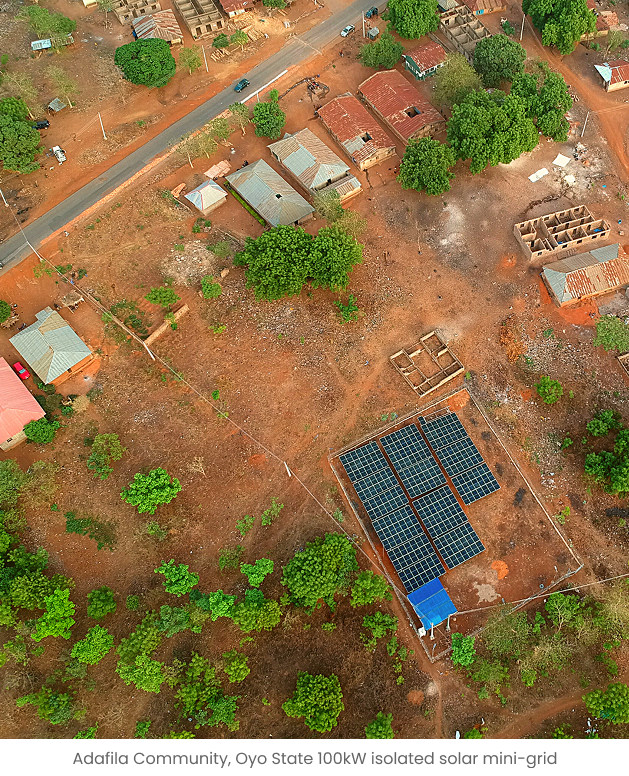
Isolated Mini-Grids: Isolated mini-grids continue to
serve as a lifeline for deep rural communities where
grid extension could boost rural economic
development. What distinguishes the DARES project is
its differentiated incentive structure, calibrated to
reflect the complexity and remoteness of each site.
Higher grant allocations are offered to developers
willing to electrify hard-to-reach, unserved
communities, expanding economic potential,
particularly in agriculture, trade, and microenterprise,
where the absence of reliable power has historically
constrained their development. These mini-grids are
now positioned as enablers of rural industrialisation
and local economic resilience.
Interconnected Mini-Grids: These systems are being
deployed in peri-urban or grid-adjacent communities,
where distribution infrastructure may already exist or
is projected to expand. By building grid-compatible
systems from the ground up, Nigeria DARES is laying
the foundation for a more resilient national grid, one
that can absorb decentralised generation and deliver
reliable power.
Most importantly, Nigeria DARES strengthens institutional capacity. We are investing in our systems, our people, and our
local ecosystems so that the ability to scale is innate. If sustainability is about what endures, then it must live in the very
architecture of our programme.
What’s New in Nigeria DARES?
Impact is not measured by the number of installations, but by
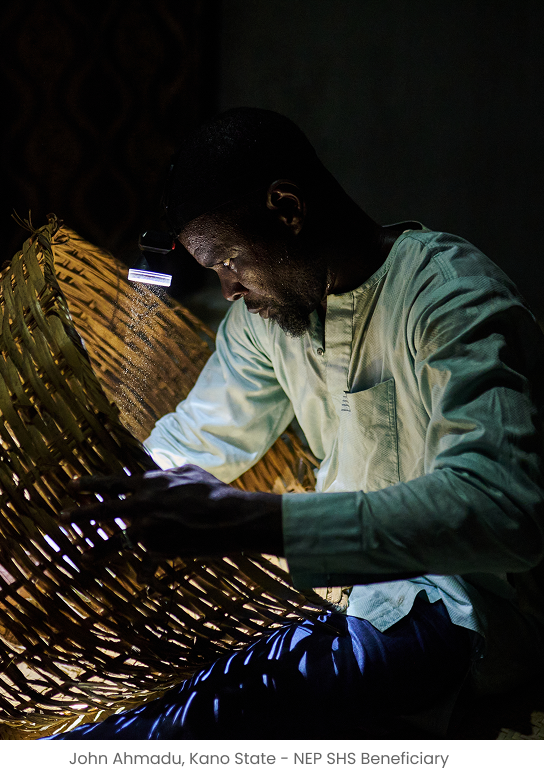
the lives transformed. Under the Nigeria Electrification Project,
now through DARES, we are powering schools, health centres,
agricultural communities, and MSMEs. We are lighting
communities, enabling students to study at night, clinics to
store vaccines, and farmers to process their harvests.
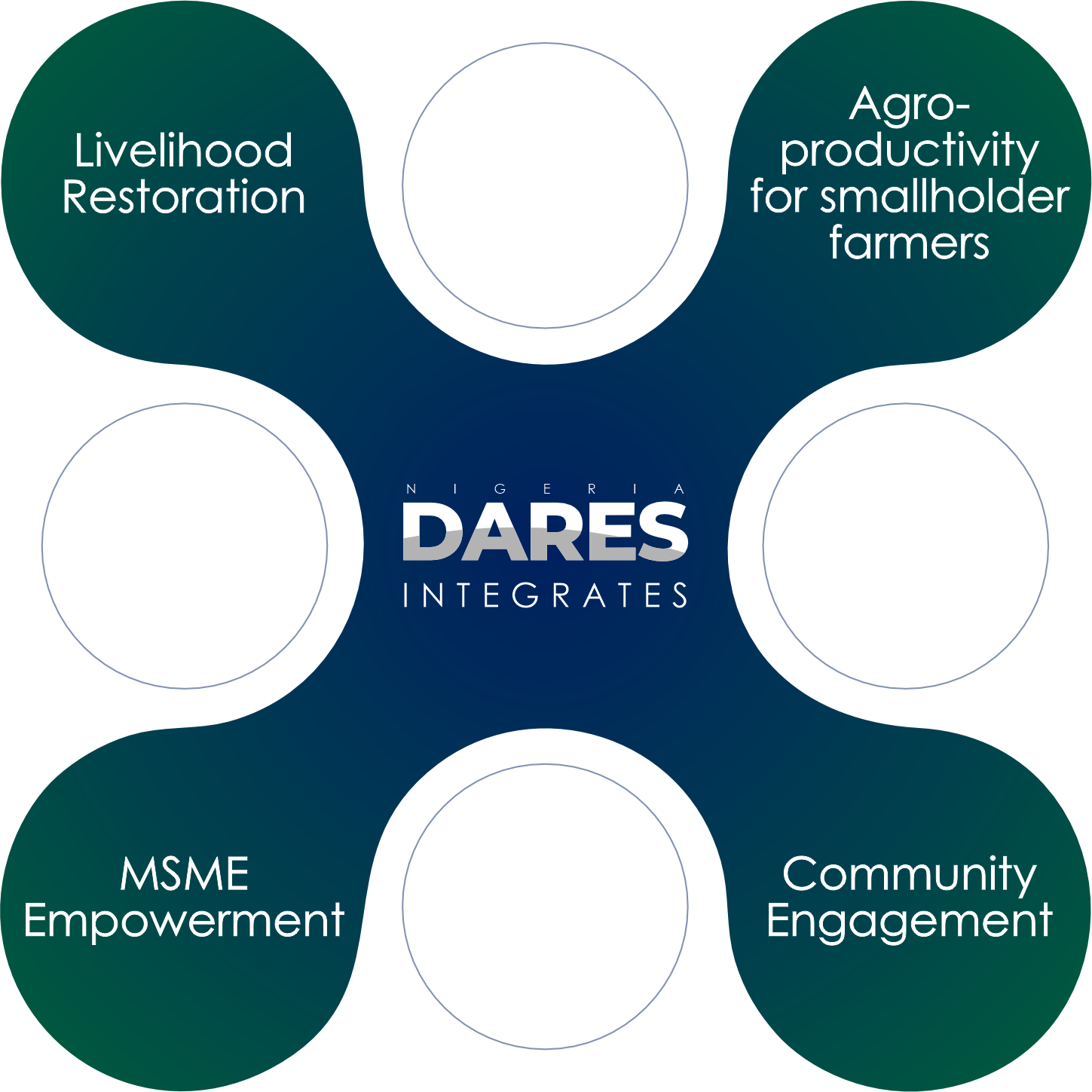
But transformation requires depth and structure. That is why
our model embeds livelihood restoration, community
engagement, and productive use of energy (PUE) strategies as
non-negotiable pillars. Electrification, in our approach, is not a
standalone intervention. It is an engine for industrialisation, job
creation, and local value addition. It is a deliberate effort to
move rural and peri-urban communities from subsistence to
enterprise, from consumption to production, and from access
to economic empowerment.
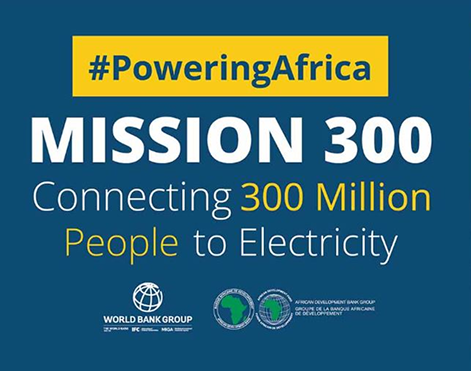
Alignment with Mission 300
The Nigeria DARES Programme is also central to advancing Nigeria’s
commitment under the Africa Energy Compact, signed alongside 11
other nations at the Mission 300 Africa Energy Summit. The Compact
sets a bold target: a 9% annual increase in electricity access between
2024 and 2030. Nigeria DARES is listed as a committed and ongoing
initiative within the Compact, and it embodies the core pillars of that
pledge. Through its private sector-led models, emphasis on last-mile
connectivity, and tailored delivery frameworks, Nigeria DARES is a
Compact-aligned mechanism accelerating universal access.
What Comes Next?
The operationalisation of DARES has already commenced in communities, institutions and hospitals that need it the most.
These milestones are reflections of an institutional mindset committed to scale, equity, and excellence.
But this is not a moment for self-congratulation. It is a call to deepen ambition and sharpen execution. We must continue to
ask hard questions: Are we listening to the communities we serve? Are we building for future climate realities? Are we
empowering developers to innovate, not just comply? How will Africa Industrialise?
Africa cannot afford to be an afterthought in the global energy transition. With the NEP through the DARES, we are
demonstrating that Africa can lead ethically, efficiently, and at scale.
“In a world of ambitious declarations and sporadic delivery, Nigeria is offering a grounded, evidencebased roadmap. One where sustainability is embedded, impact is authentic, and systemic change is
real. And if there is a blueprint for Africa’s electrification frontier, this just might be it.”

Loading comments…