News
REA Hosts 5th Window PUE Interactive Workshop under AfDB-Funded NEP
The Rural Electrification Agency (REA), through the African Development Bank (AfDB)-funded Nigeria Electrification Project (NEP), on Monday September 8, convened its 5th Application Window Interactive Workshop and Handholding Session for grantees under the Productive Use of Energy and Energy Efficient Equipment and Appliances (PUE) Component.
The session brought together successful Energy Access Companies (EACs) to deepen their understanding of the updated PUE framework, including the adoption of the Results-Based Financing (RBF) model, and to walk them through the processes for claims submission, verification, and compliance on the Odyssey digital platform.
Participants received practical demonstrations on how to upload claims and supporting evidence, alongside detailed explanations of commercial, technical, and environmental and social (E&S) requirements. The workshop also clarified sanctions for non-performance to reinforce accountability and transparency in programme delivery.
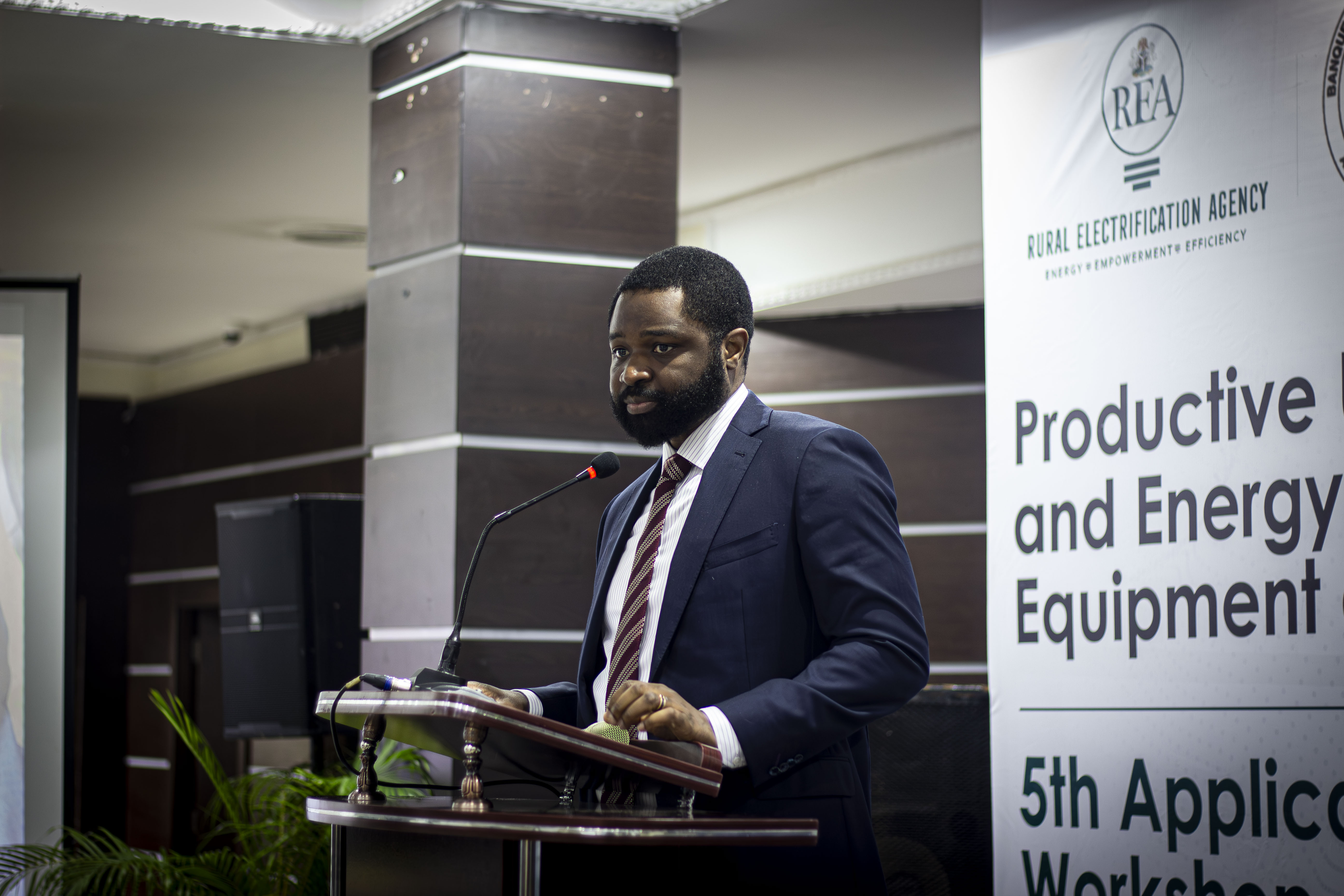
Caption: Olufemi Akinyelure, Head Nigeria Electrification Programme giving an opening remark during the PUE 5th Application Workshop.
In his welcome remarks, Mr. Olufemi Akinyelure, Head of the Nigeria Electrification Programme (HNEP) on behalf of the MD/CEO REA, highlighted the central role of PUE in achieving sustainability across rural electrification projects. “The whole concept of productive use equipment, which we now refer to as the productive use of energy, is really at the core of the energy access ecosystem that we want to drive,” he said. “Without productivity, energy isn’t affordable and, in most cases, will not even be sustainable. This component has the potential to be one of the most impactful, based on how it affects the economic value and sustainability of our people.”
The session also featured presentations by the Independent Verification Agents (IVAs), with Nextier responsible for sites in the South and Sada, Idris & Co. covering sites in the North. They provided insights into their methodologies, criteria, and checklists for validating claims, while the REA’s Project Management Unit emphasized that it would continue to conduct independent audits in addition to IVA checks.
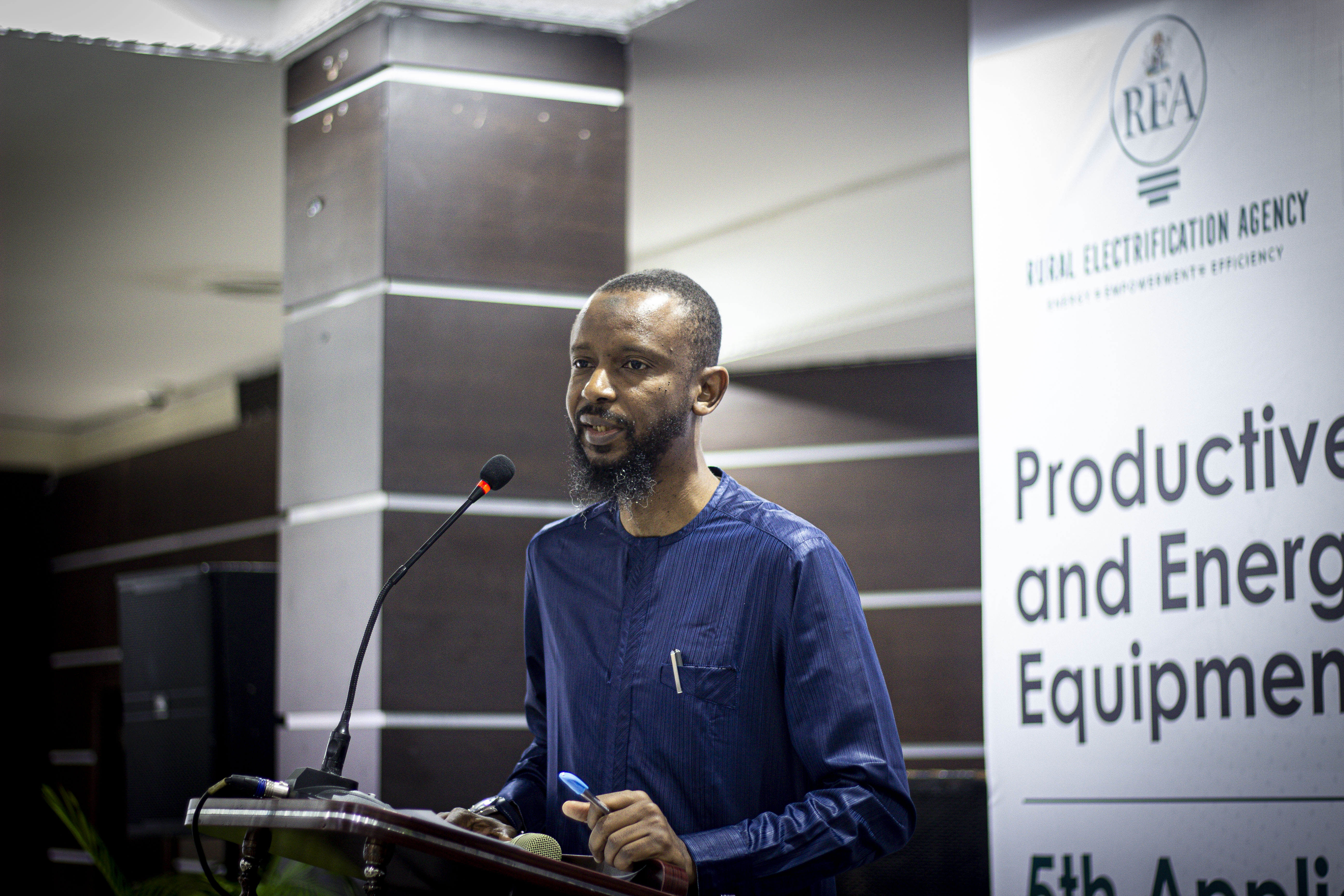
The PUE Component Coordinator, Engr Aminu Dahiru urged grantees to seek clarifications wherever needed, stressing that compliance lapses tolerated in previous application windows would not be accepted going forward. In a firm statement, the Component Coordinator noted that sites submitted in urban areas would be outrightly rejected, underscoring REA’s commitment to channelling resources toward rural productivity and industrialisation.
The workshop also touched on REA’s ongoing commitment to capacity building and sustainability through the Female Science, Technology, Engineering and Mathematics (STEM) Internship Programme under the Energizing Education Programme (EEP) Phase III. Grantees were encouraged to provide internship opportunities within their organisations for female students trained under the programme, in order to translate field learning into real-world experience.
As the Component Coordinator, Ms Funmi Jones explained, “Sustainability goes beyond equipment and infrastructure. It also means building human capacity and ensuring that the next generation, particularly women, are prepared to lead this sector.”
By convening this 5th application window workshop, REA reaffirmed its role as a catalyst for clean energy-driven rural economic transformation. With stronger accountability mechanisms, a results-based financing approach, and renewed emphasis on capacity building, the PUE component continues to push the boundaries of how renewable energy can empower communities, stimulate local industries, and improve livelihoods.
Loading comments…